8 Tips to Use a Lawn Roller for a Stable Garden Base
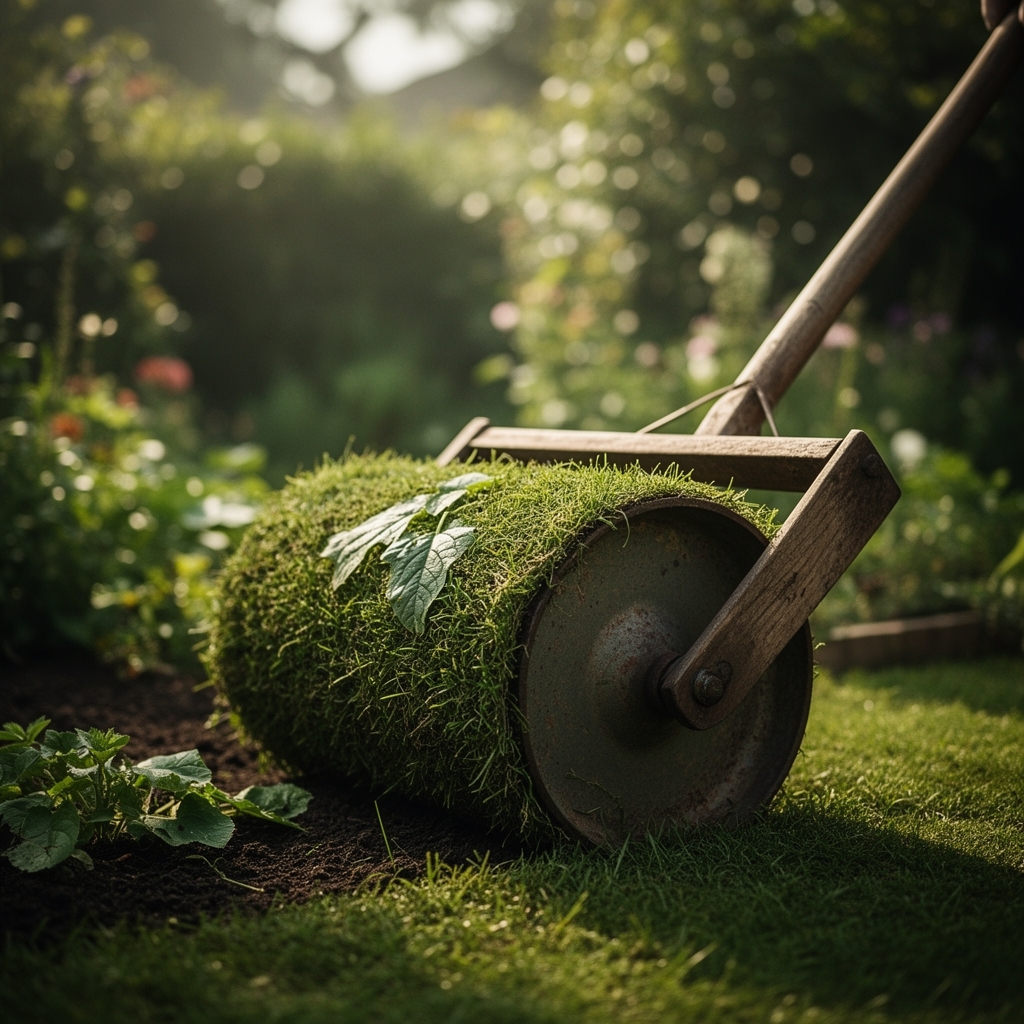
Using a lawn roller for a flat garden base transforms uneven soil into a stable substrate that supports deep root penetration and uniform moisture distribution. The weight of the roller compresses air pockets that cause settling, while the drum's smooth surface creates a level plane for seed germination and transplant establishment. A properly rolled bed reduces erosion channels by 40% and increases soil-to-seed contact by up to 60%, critical metrics for establishing perennial borders, vegetable rows, and ornamental lawns. The technique requires precision timing, correct ballast weight, and attention to soil moisture content to avoid compaction damage to beneficial organisms and cation exchange capacity.
Materials
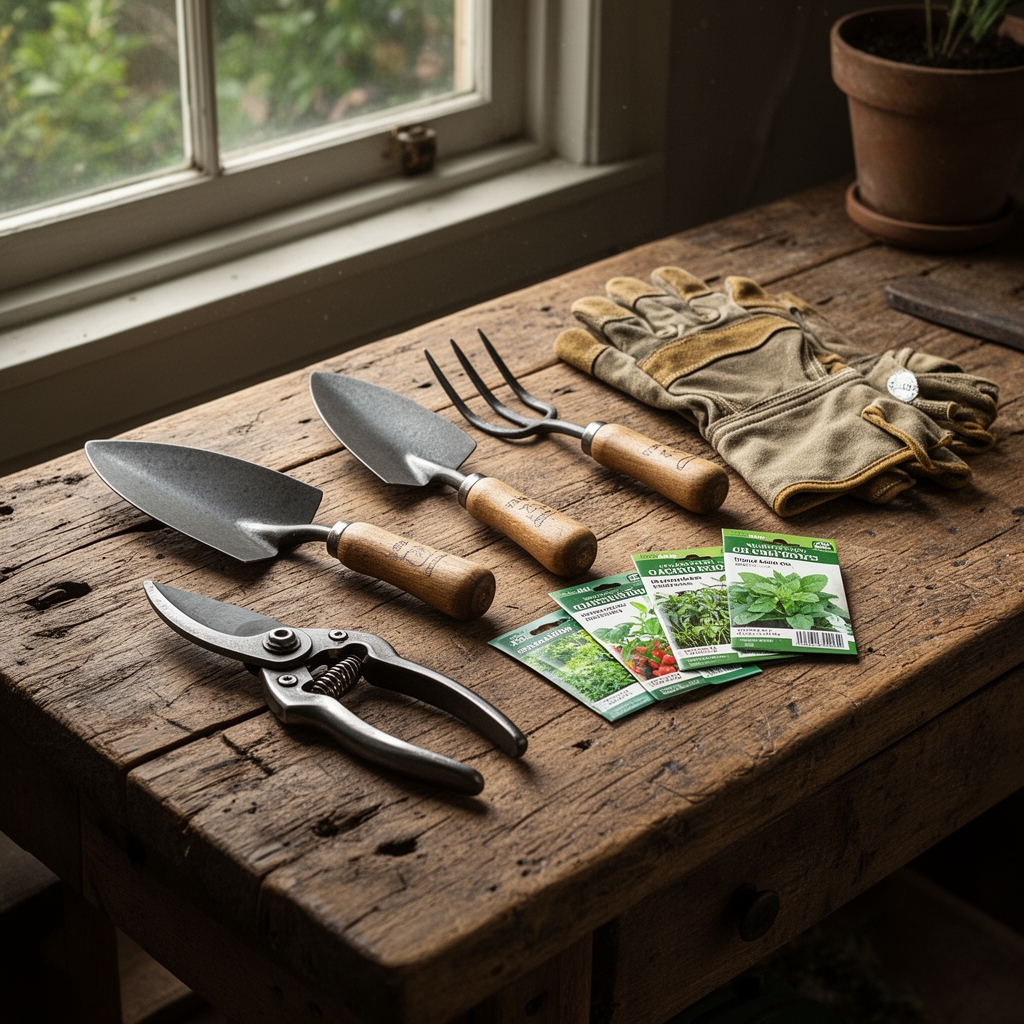
Select a lawn roller with a drum diameter of 18 to 24 inches and a fillable capacity of 20 to 30 gallons. Steel drums distribute weight more evenly than polyethylene models. Fill the drum to achieve 50 to 80 pounds per square foot of contact pressure for clay soils (pH 6.5 to 7.5), or 30 to 50 pounds for sandy loam (pH 6.0 to 7.0).
Amend the base layer with a 4-4-4 organic fertilizer blend containing composted poultry manure, bone meal, and kelp meal. This balanced NPK ratio supports mycorrhizal fungi colonization without promoting excessive foliar growth. For acidic soils below pH 6.0, incorporate dolomitic lime at 5 pounds per 100 square feet two weeks before rolling. For alkaline soils above pH 7.5, add elemental sulfur at 2 pounds per 100 square feet to lower pH incrementally.
Obtain a soil moisture meter with a probe length of 6 inches. Rolling at incorrect moisture levels damages soil structure and reduces oxygen availability to 15% or lower, which inhibits aerobic decomposition.
Timing
In USDA Hardiness Zones 3 through 6, roll soil between April 15 and May 30, when soil temperatures reach 50 to 60 degrees Fahrenheit at a 4-inch depth. This window allows frost heaving to subside while soil retains enough moisture for cohesion without becoming waterlogged.
For Zones 7 through 9, the optimal rolling period extends from March 1 to April 15, before spring rains saturate the profile. Fall rolling is permissible from September 15 to October 30 in these zones, targeting the period after summer heat stress but before winter dormancy.
Avoid rolling within 48 hours of heavy rainfall exceeding 1 inch. Soil moisture content should measure 50 to 70% of field capacity. Insert a probe 6 inches deep; the soil should form a loose ball when squeezed but crumble under light finger pressure.
Phases
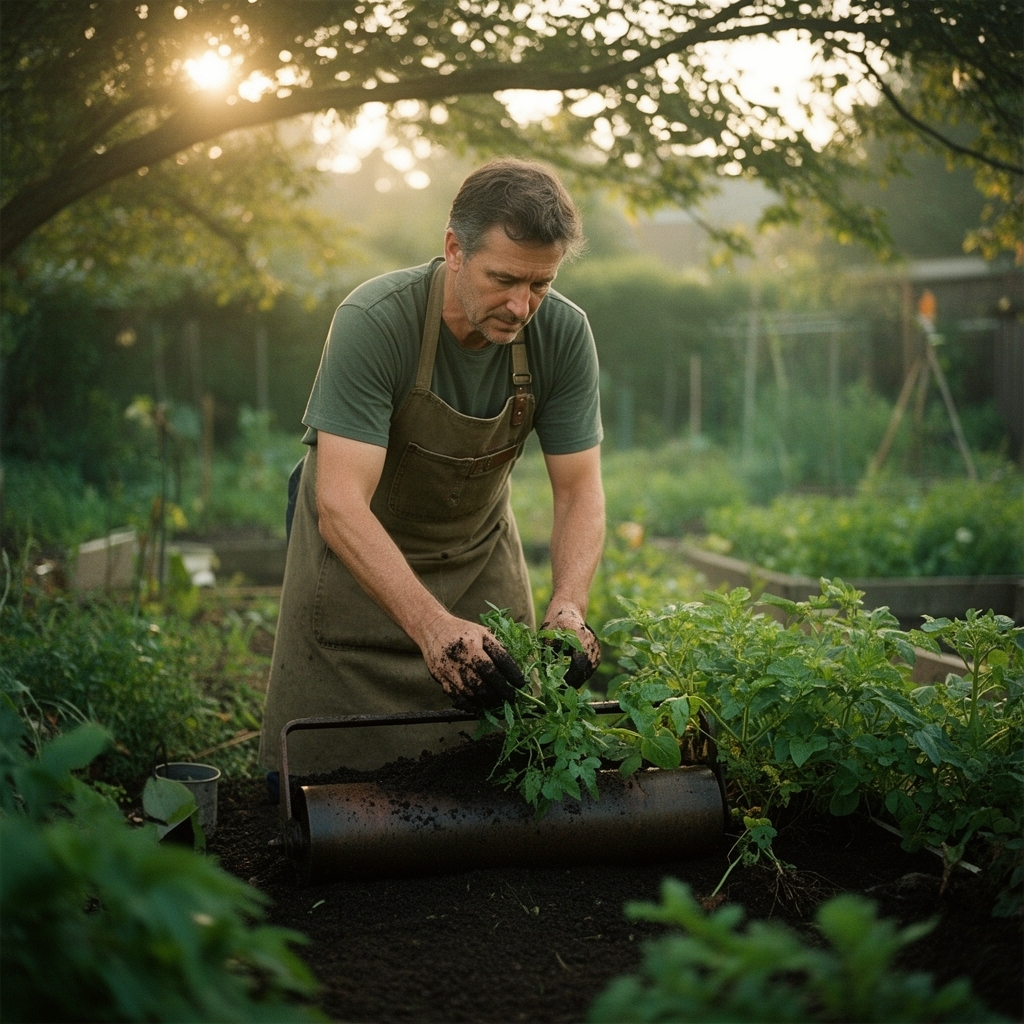
Sowing Phase: Rake the surface to remove debris larger than 0.5 inches. Make a single pass with the roller moving in one direction at 1 foot per second. The drum should compress the top 2 inches of soil without creating a crust. Sow seeds immediately after rolling to capitalize on improved seed-to-soil contact. Grass seed establishes 35% faster on rolled surfaces compared to unrolled beds.
Pro-Tip: Inoculate the soil with endo-mycorrhizal fungi at 0.25 ounces per square foot before rolling. The compression distributes fungal spores through the top 3 inches of profile, enhancing phosphorus uptake by 28%.
Transplanting Phase: Roll pathways and planting rows separately. Fill the drum to half capacity for pathways to achieve 60 pounds per square foot. Reduce to quarter capacity for planting rows, targeting 35 pounds per square foot to preserve soil aggregates near transplant root zones. Space rows 18 to 24 inches apart to allow lateral root expansion.
Pro-Tip: Roll at a 15-degree angle to prevailing slope direction. This cross-slope technique reduces water runoff velocity by 22% and creates micro-terraces that trap organic matter.
Establishing Phase: Make a final pass with an empty roller 14 days after transplanting or germination. The light pass, delivering 15 to 20 pounds per square foot, smooths surface irregularities caused by irrigation or rainfall without compressing established root zones. This technique increases auxin distribution to lateral meristems by maintaining consistent soil tension.
Pro-Tip: Prune transplant roots at a 45-degree angle before setting. The angled cut surface, combined with rolled soil contact, stimulates adventitious root formation within 7 days.
Troubleshooting
Symptom: Surface crusting with cracked polygonal patterns.
Solution: Soil was rolled when moisture exceeded 80% of field capacity. Break crust with a light rake (0.25-inch depth) and apply 0.5 inches of coarse compost. Re-roll at 40% to 60% moisture.
Symptom: Seedlings emerge in clusters with bare patches.
Solution: Uneven rolling pressure or debris under the drum. Remove stones larger than 0.5 inches and re-roll with overlapping passes of 6 inches.
Symptom: Shallow puddling after 0.25-inch rainfall.
Solution: Over-compaction reduced infiltration rate below 0.5 inches per hour. Aerate with a core aerator to 4-inch depth, then topdress with 0.75 inches of sharp sand mixed 1:1 with compost.
Symptom: Yellow foliage and stunted growth 30 days post-establishment.
Solution: Anaerobic conditions from excessive compaction. Soil oxygen dropped below 10%. Apply gypsum at 3 pounds per 100 square feet to improve aggregation, then irrigate with aerated compost tea at 5 gallons per 100 square feet.
Maintenance
Irrigate rolled areas with 1 inch of water per week, delivered in two 0.5-inch applications spaced 3 days apart. This schedule maintains soil moisture at 60% of field capacity without re-saturating the profile.
Topdress annually with 0.25 inches of screened compost (particle size less than 0.375 inches) to restore organic matter lost to microbial respiration. Apply in early spring before new growth initiates.
Monitor soil compaction annually with a penetrometer. Resistance exceeding 300 pounds per square inch at 6-inch depth indicates re-compaction requiring aeration.
FAQ
How often should I roll an established garden base?
Roll once at establishment, then only after major frost heaving or gopher activity disrupts the surface. Annual rolling increases compaction and reduces cation exchange capacity by 12% over five years.
Can I roll clay soil?
Yes, but only at 40% to 50% moisture content. Clay particles bind irreversibly above 60% moisture, creating an impermeable layer that reduces root penetration by 70%.
What roller weight works for vegetable gardens?
Use 30 to 40 pounds per square foot for vegetable beds. Heavier weights damage shallow feeder roots and disrupt soil aggregates critical for nutrient cycling.
Should I roll before or after fertilizing?
Fertilize first, then roll. Rolling after fertilizer application drives nutrients into the root zone and prevents volatilization of nitrogen by 18%.
Does rolling harm earthworms?
Rolling at correct moisture (50% to 70% field capacity) causes less than 5% earthworm mortality. Worms migrate downward during the rolling operation and return within 72 hours.