7 Steps to Use a Paintbrush for Indoor Plant Pollination
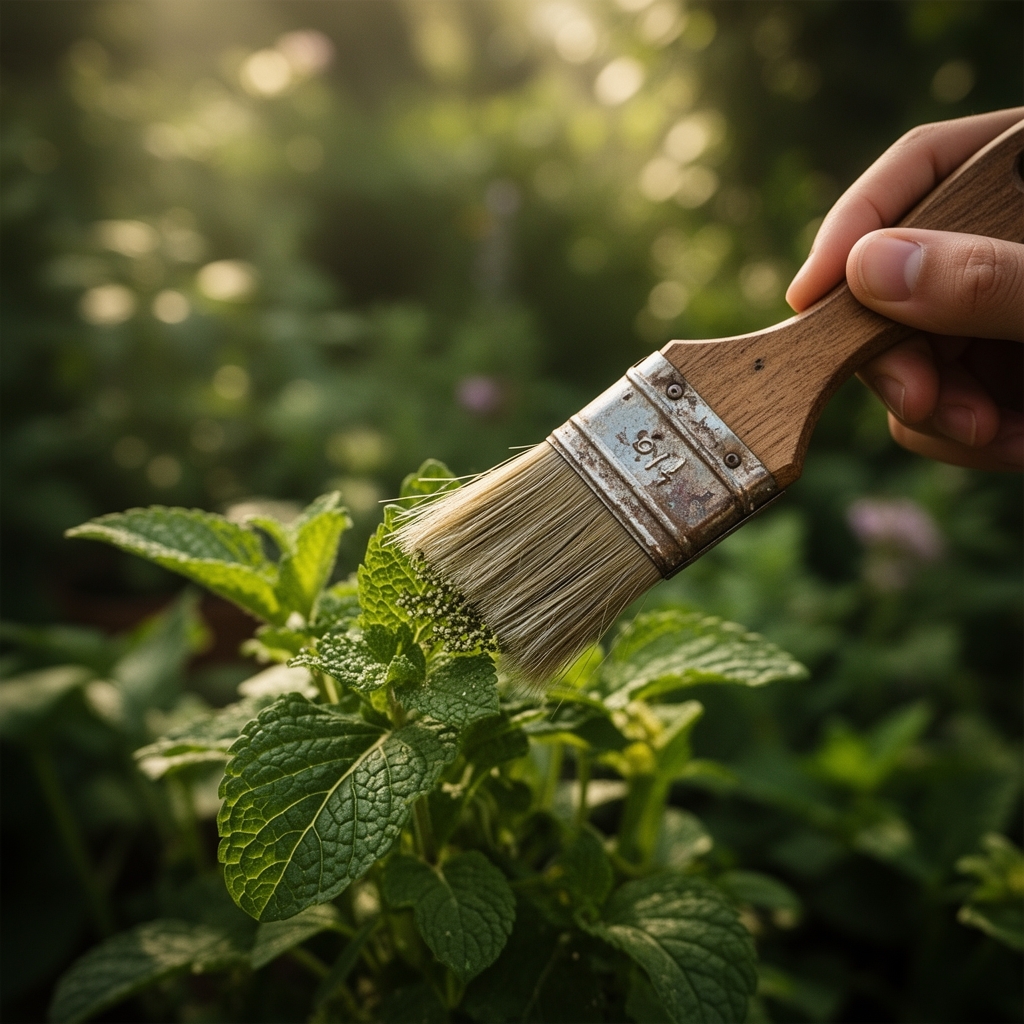
When tomato flowers bloom indoors under artificial light, no breeze or bee will nudge pollen from anther to stigma. Using a paintbrush for indoor plant pollination becomes the gardener's direct intervention, a simple stroke that mimics the work of wind and insect. The soft bristles collect dusty pollen grains and transfer them across flower structures with precision that no shaking or vibration can match. Peppers, eggplants, strawberries, and squash grown in greenhouses or grow tents depend entirely on this manual transfer. Without it, flowers drop without setting fruit, and weeks of vegetative growth yield nothing edible.
Materials
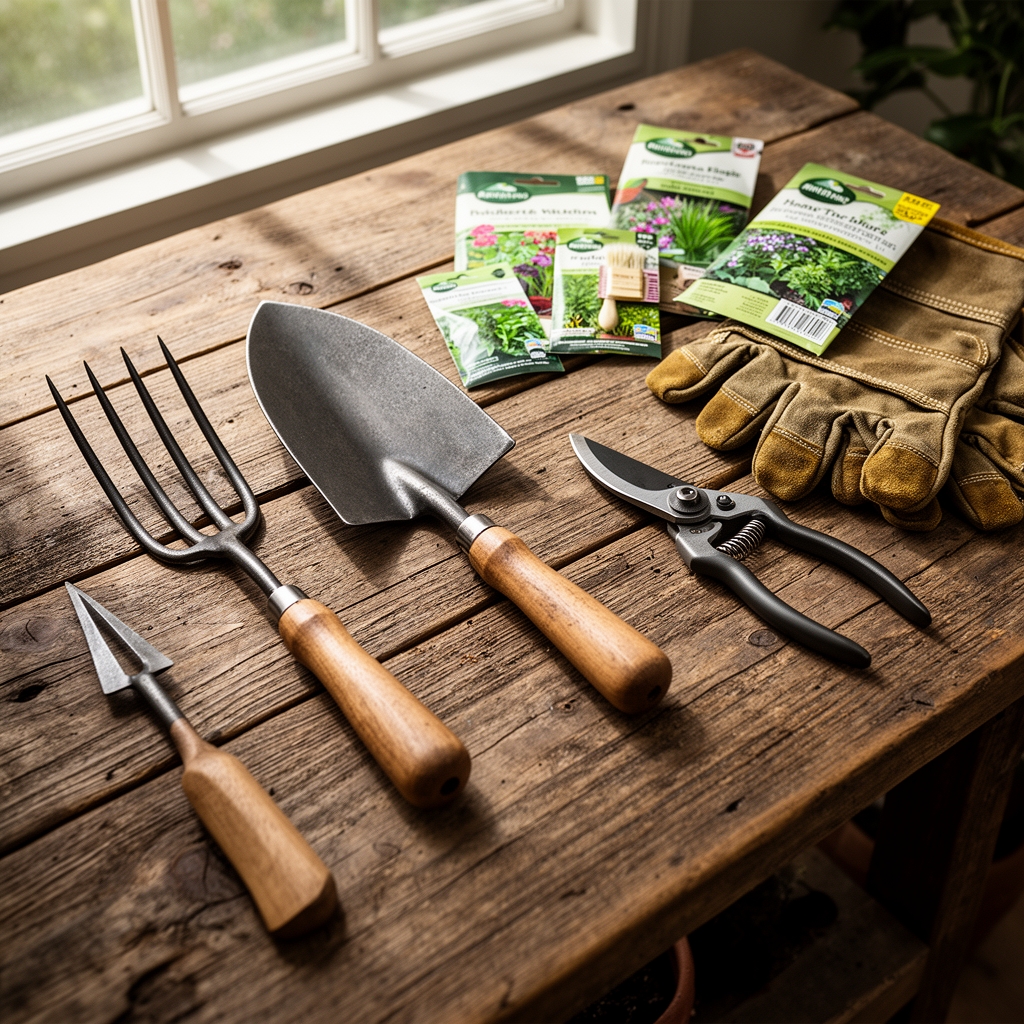
The primary tool is a soft-bristled paintbrush, size 6 to 12, made from natural fibers. Synthetic nylon generates static that repels pollen grains. Sable or camel hair works best because the irregular surface of natural bristles holds pollen without crushing it. A dedicated brush prevents cross-contamination between plant families.
For optimal flowering, maintain substrate pH between 6.0 and 6.8. Use a balanced organic fertilizer rated 4-4-4 or 5-5-5 during early bloom. Transition to a 2-5-3 formulation once flowers open to direct phosphorus toward reproductive structures rather than vegetative growth. Incorporate bone meal at 3 tablespoons per gallon of growing medium two weeks before anticipated flowering. Calcium availability directly influences pollen tube elongation after pollination occurs.
Keep a small glass vial or film canister to store collected pollen if working with dioecious species like kiwi or spinach. Pollen remains viable for 24 to 48 hours when refrigerated at 38°F in a desiccated container with silica gel packets.
Timing
Indoor environments eliminate hardiness zone constraints, but circadian rhythm still governs pollen release. Most flowering plants release pollen between 8:00 a.m. and 11:00 a.m. under standard photoperiods. Tomatoes and peppers grown under 14-hour light cycles peak between the second and third hour after lights activate.
Stigma receptivity lasts 48 to 72 hours after the flower fully opens. The stigma surface appears moist and slightly sticky when receptive. A dry or brown stigma will not accept pollen. Pollinate within the first 24 hours of full bloom for maximum fruit set.
Humidity between 50% and 70% ensures pollen remains dry enough to transfer but does not desiccate prematurely. Below 40% humidity, pollen grains lose viability within hours. Above 80%, pollen clumps and will not adhere to brush bristles.
Phases
Sowing Phase: Select cultivars bred for indoor production. Determinate tomatoes and compact pepper varieties produce concentrated flower clusters that simplify pollination. Start seeds in a sterile mix with a cation exchange capacity above 15 meq/100g. Incorporate mycorrhizal fungi inoculant at sowing to improve phosphorus uptake during reproductive stages.
Pro-Tip: Expose seedlings to a 10°F temperature drop at night once they reach four true leaves. This cold stratification primes auxin distribution toward flowering rather than vegetative branching.
Transplanting Phase: Move seedlings into final containers before the first flower buds appear. Root disturbance after bud formation causes flower drop in solanaceous crops. Use containers at least 5 gallons for tomatoes and 3 gallons for peppers. Amend the growing medium with worm castings at 1 cup per gallon to buffer pH and improve micronutrient availability.
Pro-Tip: Prune the apical meristem at a 45-degree angle two nodes above the first flower truss. This redirects carbohydrates into existing flowers and improves fruit size by 20% to 30%.
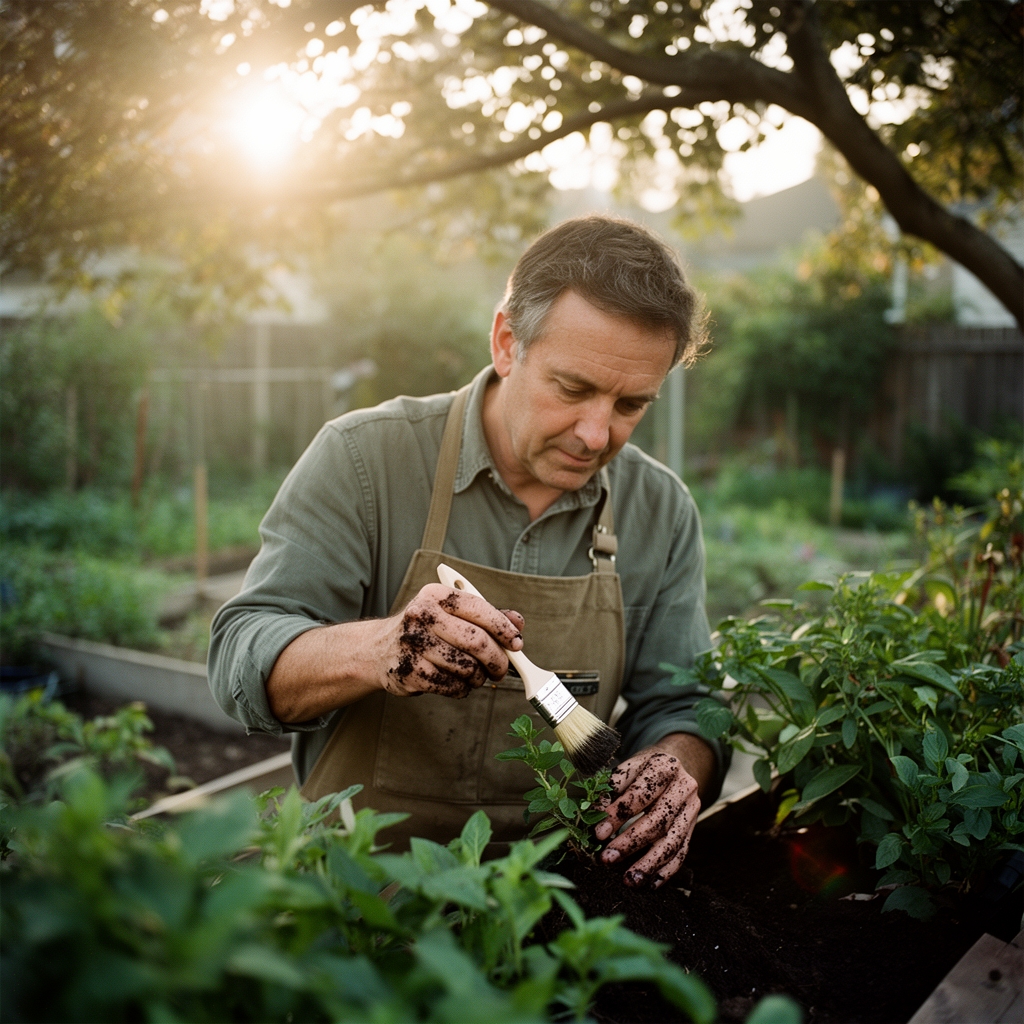
Establishing Phase: Begin pollination the morning after flowers fully open. Gently insert the brush into the center of the flower and rotate three full circles. The brush should visibly carry yellow pollen grains. Move immediately to the next flower and repeat the circular motion. Work systematically from bottom trusses upward to avoid shaking pollen from upper flowers onto lower ones prematurely.
Pro-Tip: Tap the main stem with your finger immediately after brushing. The vibration dislodges any remaining pollen and improves contact between pollen grains and the stigma surface. This technique increases fruit set by 15% in controlled trials.
Troubleshooting
Symptom: Flowers open but drop within 48 hours without fruit formation.
Solution: Night temperatures exceed 75°F or fall below 55°F. Adjust environmental controls to maintain 62°F to 70°F during dark periods. High nitrogen fertilizer (above 10% N) also causes blossom drop. Switch to a 2-5-3 ratio immediately.
Symptom: Pollen appears gray or brown instead of bright yellow.
Solution: Boron deficiency inhibits pollen development. Apply 1 teaspoon of borax dissolved in 1 gallon of water as a soil drench. Repeat every three weeks during flowering.
Symptom: Fruit begins to develop but remains small and malformed.
Solution: Incomplete pollination. Increase brush strokes to five full rotations per flower. Pollinate the same flower on consecutive days to ensure full pollen coverage across the stigma.
Symptom: Thrips visible on flower petals.
Solution: These insects damage pollen grains and stigma tissue. Spray flowers with spinosad at 4 tablespoons per gallon in the evening after pollinating. Reapply every seven days until no insects appear.
Maintenance
Pollinate every flower every morning during the bloom period. A single missed day reduces total yield by 10% to 15%. Water plants to field capacity before pollinating. Wilted flowers close partially and obscure the stigma.
Provide 1 inch of water per week, delivered in two deep soakings rather than daily misting. Excess moisture on flowers causes pollen to clump and fail. Maintain light intensity at 400 to 600 µmol/m²/s during flowering. Lower levels reduce pollen production.
Prune suckers and non-flowering lateral branches weekly. Removing vegetative growth redirects carbohydrates into developing fruit and improves the calcium-to-potassium ratio in the vascular system.
FAQ
How long does pollen stay viable on the brush?
Pollen viability drops by 50% within 30 minutes of collection. Pollinate immediately after gathering pollen from anthers. Clean the brush with isopropyl alcohol between plant species to prevent genetic contamination.
Can I use an electric toothbrush instead?
Vibration from electric devices works for tomatoes but damages delicate flowers like strawberries and cucurbits. The rotational motion of a hand brush provides better control.
Do all indoor plants need manual pollination?
Only plants that require pollen transfer for fruit set. Leafy greens, herbs grown for foliage, and ornamental plants grown for leaves do not require pollination.
What if no pollen appears on the brush?
The plant may be too young, over-fertilized with nitrogen, or stressed by temperature extremes. Pollen production resumes once conditions stabilize.
How many flowers should one plant produce?
Indeterminate tomatoes produce 6 to 12 flowers per truss continuously. Determinate varieties set 20 to 40 flowers over three weeks. Peppers produce 15 to 30 flowers per plant depending on cultivar and container size.