6 Natural and Chemical Tips for Treating Fungus Gnats
Fungus gnats swarm in lazy spirals above your potting soil, betraying a hidden infestation below. These tiny black flies, Bradysia and Sciaridae species, emerge from soil rich in decomposing organic matter where their larvae feed on root hairs and fungal mycelia. The steps for treating fungus gnats in houseplants begin with understanding their 21- to 28-day lifecycle: from egg to four larval instars, then pupa, and finally the short-lived adult. Breaking this cycle at multiple points through coordinated natural and chemical interventions restores root health and halts population explosions.
Materials
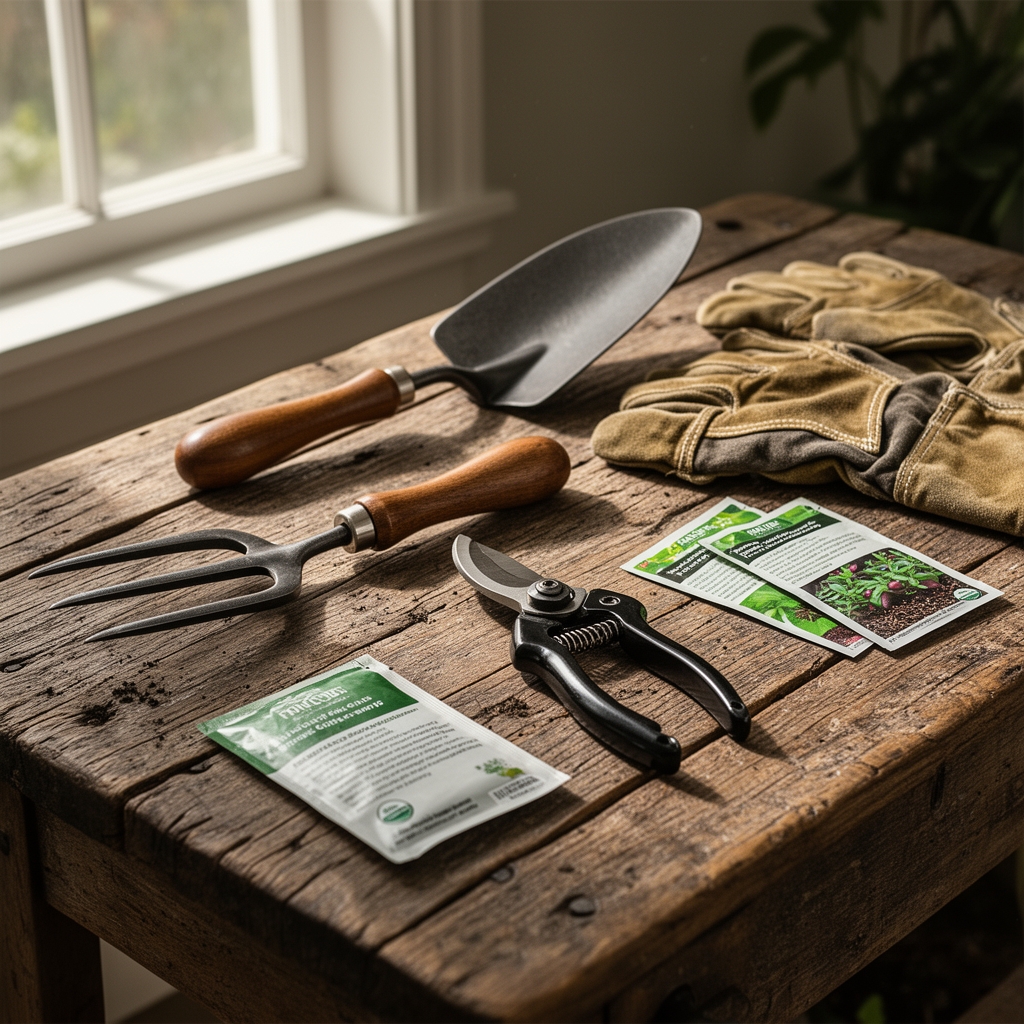
Assemble intervention materials based on active ingredient and soil chemistry compatibility. Bacillus thuringiensis subspecies israelensis (Bti) operates at pH 6.0 to 7.5 and contains zero NPK value, functioning purely as a biological larvicide. Food-grade diatomaceous earth works mechanically across all pH ranges, providing silicon dioxide that desiccates larvae on contact. Neem cake, a byproduct of oil extraction, delivers azadirachtin at concentrations near 2,500 ppm and carries an approximate NPK of 4-1-2 while lowering soil pH by 0.2 to 0.4 units over eight weeks.
Yellow sticky traps measure 3 by 5 inches and monitor adult populations through wavelength attraction at 550 to 590 nanometers. Hydrogen peroxide at 3% concentration oxidizes organic matter and kills eggs on contact, temporarily raising soil pH by 0.3 units for 48 hours. Mosquito bits containing Bti granules release spores rated at 6,000 to 7,000 International Toxic Units per milligram. Pyrethrin-based sprays, derived from Chrysanthemum cinerariifolium, provide fast knockdown for adults but degrade within 24 hours under UV exposure. Soil moisture meters calibrated to read 0 to 10 prevent overwatering, the primary driver of fungus gnat habitat suitability.
Timing
Indoor fungus gnat treatment operates independently of USDA Hardiness Zones but responds to seasonal light intensity. Begin intervention protocols when adult counts exceed five individuals per yellow trap over 72 hours. Late autumn through winter sees peak fungal activity as reduced evapotranspiration keeps potting media saturated longer. Photosynthetically active radiation drops to 200 to 400 micromoles per square meter per second during December and January in temperate zones, slowing plant water uptake and creating ideal conditions for Pythium and Fusarium, which attract egg-laying females.
Spring treatment beginning at the vernal equinox capitalizes on increasing daylengths of 12-plus hours, boosting auxin distribution and root regeneration rates. Apply treatments in early morning when soil temperatures measure 60 to 68°F, optimizing Bti spore germination and larvicidal activity. Coordinate chemical applications with the new moon phase when reduced gravitational pull theoretically lowers sap pressure, though empirical data remains inconclusive.
Phases

Initial Intervention (Days 1-7)
Remove the top 0.5 inch of potting medium where 80% of eggs concentrate. Replace with horticultural sand or perlite, creating a desiccation barrier that prevents adult oviposition. Drench soil with Bti solution mixed at 1 tablespoon mosquito bits per gallon of dechlorinated water, ensuring saturation to field capacity. Install yellow sticky traps at soil level, positioning them 2 inches from pot rims to intercept emerging adults.
Pro-Tip: Add 20 ml of 3% hydrogen peroxide per 4-inch pot diameter, pouring slowly to achieve 15 seconds of visible foaming. This reaction indicates contact with organic matter and larvae.
Population Suppression (Days 8-21)
Reapply Bti drench every seven days to target newly hatched larvae before they reach third instar, the most destructive feeding stage. Reduce irrigation frequency to allow the top 2 inches of medium to dry completely between waterings, measured at soil moisture readings below 3 on a 10-point scale. This desiccation kills first-instar larvae within 36 hours while maintaining adequate moisture at root-zone depth of 3 to 5 inches.
Surface-apply diatomaceous earth at 2 tablespoons per 6-inch pot, creating a 0.25-inch barrier. The material's cation exchange capacity of 15 to 40 milliequivalents per 100 grams also buffers pH fluctuations. Monitor trap counts daily, expecting a 70% reduction by day 14.
Pro-Tip: Inoculate treated soil with Steinernema feltiae nematodes at 5 million individuals per 1,600 square feet. These parasitoids seek larvae in moisture films but require soil temperatures above 55°F for motility.
Establishment and Prevention (Days 22-60)
Incorporate neem cake into the top 3 inches of potting medium at 1 tablespoon per gallon of soil volume. Azadirachtin disrupts larval molting hormones while improving soil structure through increased humic acid content. Transition to bottom-watering through saucer immersion for 20 minutes, which maintains surface dryness inhospitable to egg-laying.
Apply pyrethrin foliar spray only if adult counts rebound above three per trap, targeting undersides of lower leaves where adults rest. The compound degrades within 12 hours indoors, requiring reapplication every three days for persistent populations.
Pro-Tip: Amend media with mycorrhizal fungi at transplanting, particularly Glomus intraradices, which colonizes 40% to 60% of root cortex within eight weeks and outcompetes saprophytic fungi that feed gnat larvae.
Troubleshooting
Symptom: Adults persist after three Bti applications. Solution: Larvae have reached fourth instar or pupal stage, which Bti does not affect. Wait seven days for adult emergence, then resume drenching to target the next generation. Increase yellow trap density to two per plant.
Symptom: Root tips show brown discoloration despite gnat control. Solution: Larval feeding has damaged root hairs. Foliar-feed with kelp extract at 1 tablespoon per gallon every five days to supply cytokinins that stimulate lateral root production. Expect recovery in 14 to 21 days.
Symptom: Hydrogen peroxide drench causes temporary wilting. Solution: Concentration exceeded 3%, causing root tip oxidation. Flush with 2 gallons of pH 6.5 water per gallon of pot volume. Wilting should reverse within six hours as turgor pressure restores.
Symptom: Diatomaceous earth clumps and loses efficacy. Solution: High humidity above 65% has caused caking. Reapply dry material and reduce ambient moisture with dehumidifier operation targeting 45% to 50% relative humidity.
Symptom: Neem cake application triggers nutrient burn, evidenced by marginal leaf scorch. Solution: Application rate exceeded 1 tablespoon per gallon, elevating electrical conductivity above 2.5 millisiemens per centimeter. Leach soil with 3 gallons of water per pot gallon, allowing drainage for 30 minutes.
Maintenance
Water houseplants only when the top 2 inches of medium registers below 2 on a moisture meter or when pot weight decreases by 30% from saturation. For a standard 6-inch pot holding 0.5 gallons of medium, this translates to 200 ml of water every five to seven days, depending on species transpiration rates. Apply Bti preventatively at half-strength every 21 days during autumn and winter when heating systems reduce ambient humidity below 40%.
Refresh the top 0.5-inch sand or perlite barrier every eight weeks as organic debris accumulates. Maintain air circulation at 50 to 100 cubic feet per minute using oscillating fans positioned 4 feet from plant canopies to prevent adults from settling on soil surfaces. Inspect new plants for 14 days in quarantine, watching for larval emergence indicated by sudden adult appearance near drainage holes.
Feed established plants with controlled-release fertilizer rated 14-14-14 at half the manufacturer's recommendation to avoid excess nitrogen that stimulates fungal growth. Prune dead foliage within 24 hours of appearance, as decomposing tissue attracts ovipositing females. Repot every 18 to 24 months using sterile medium to eliminate accumulated organic matter and reset the biological environment.
FAQ
How quickly do fungus gnats reproduce indoors?
Females lay 200 to 300 eggs over a three- to four-day lifespan. At 75°F, eggs hatch in four to six days, larvae mature in 12 to 14 days, and pupae emerge as adults in three to four days. Total generation time spans 21 to 28 days, enabling exponential population growth without intervention.
Can fungus gnats spread plant diseases?
Larvae vector Pythium, Verticillium, and Fusarium spores on their cuticles, transmitting root pathogens between plants. Adults do not bite or feed significantly but their presence indicates conditions favorable for fungal and bacterial proliferation.
Is Bti safe for food crops and pets?
Bacillus thuringiensis israelensis targets only Dipteran larvae, specifically mosquitoes and gnats. It shows zero toxicity to mammals, fish, birds, and beneficial insects. The EPA classifies it as exempt from residue tolerance requirements on edible crops.
Do fungus gnats damage healthy plants?
Mature plants with established root systems tolerate moderate larval feeding. Seedlings, cuttings, and stressed plants suffer root pruning that reduces water uptake by 20% to 40%, causing stunted growth and increased susceptibility to drought stress.
How long until results appear after treatment?
Adult populations drop 40% to 60% within seven days as first treatments eliminate larvae. Complete eradication requires three to four weeks to interrupt all lifecycle stages. Trap counts should reach zero by day 30 with proper protocol adherence.